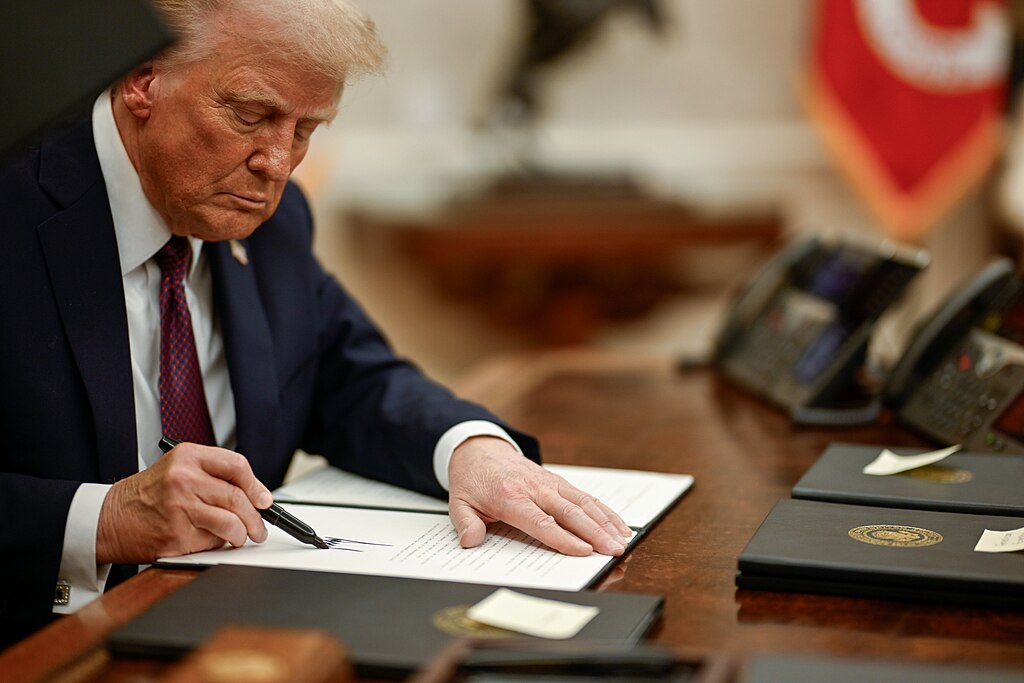
U.S. President Donald Trump announced new tariffs on Mexican, Canadian, and Chinese imports, citing ongoing fentanyl smuggling. Starting March 4, a 25% tariff will apply to Mexican and Canadian goods, while an additional 10% duty on Chinese imports will increase the total tariff to 20%.
Trump stated that despite efforts, fentanyl is still flowing into the U.S. at high levels, leading him to move forward with the tariffs. The White House noted that while border security has improved, fentanyl-related deaths remain a major concern. Customs and Border Protection reported seizing 991 pounds of fentanyl at the southwest border in January 2025, a 50.5% decline from the previous year but still significant.
Mexico has responded by agreeing to extradite drug lord Rafael Caro Quintero. However, Trump's freeze on foreign aid has stalled a UN-backed effort to enhance Mexico’s cargo screening for fentanyl precursors. Additionally, the U.S. has delayed a planned crackdown on low-value duty-free shipments from China, Canada, and Mexico.
The tariff hike mirrors Trump's first-term trade war with China, which saw tariffs escalate until negotiations began. Experts suggest the latest move is part of a broader U.S. strategy to pressure Beijing, with China imposing limited retaliatory duties. Beijing, facing economic struggles, has urged dialogue while warning of economic risks.
Canadian and Mexican officials are meeting with U.S. counterparts to prevent the tariffs, emphasizing their progress in combating fentanyl trafficking. Canada has announced new initiatives targeting illegal narcotics, while Mexico is considering further trade measures. Trump, however, insists the tariffs will not fuel inflation, arguing they ensure fair trade.